
How to Design an Event Programme That People Actually Keep
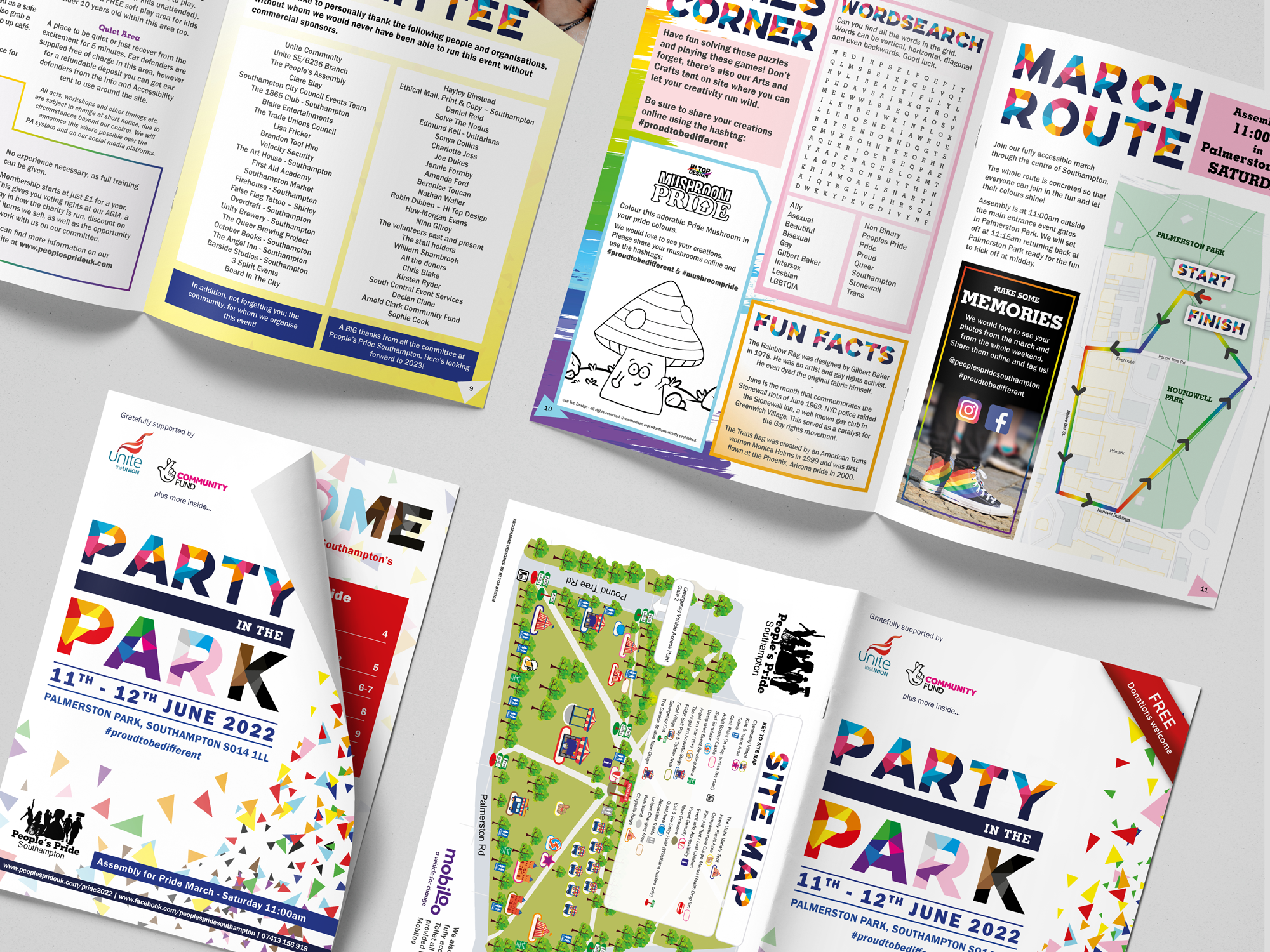
People’s Pride Southampton - Party in the Park Programme
If you've ever been handed a flimsy, text-heavy booklet at an event and stuffed it straight into your bag never to be seen again - you'll know that a poorly designed event programme is a missed opportunity. A well-designed event programme isn't just a schedule. It's part of the experience. It's something people pick up, flick through, and - if you get it right - actually hold onto.
Whether you're organising a theatre night, a community festival, a pride event, or a corporate awards evening, knowing how to design an event programme that looks beautiful and works hard for your brand is one of the best investments you can make.
Here's my guide to getting it right.
What Is an Event Programme (and Why Does It Matter)?
An event programme is a printed or digital document that guides your audience through the event. It typically includes the running order, key information about performers or speakers, sponsor acknowledgements, and anything else your guests need to know.
But beyond the practical stuff, a programme is a brand touchpoint. It's in your guest's hands before the event even begins. That's prime real estate - and it should feel like it.
A beautifully designed programme communicates that you care about the details. It builds anticipation, sets the tone, and gives your event a sense of occasion. Done well, it becomes a souvenir.
What to Include in Your Event Programme
Before you think about how it looks, get clear on what needs to go in it. Here's a solid starting checklist:
Essential content:
Event name, date, venue, and start time
Running order or schedule
Performer, speaker, or act listings
A welcome message from the organiser or patron
Sponsor logos and acknowledgements
Emergency and accessibility information
Nice to include:
Bios for key performers or speakers
Behind-the-scenes notes or a director's letter
Photography or illustration
QR codes linking to extra content or social channels
Space for notes (especially useful for conferences)
Less is often more. Resist the urge to fill every inch - white space is your friend.
How to Design an Event Programme: The Key Principles
1. Start with your brand, not a template
This is the one I see people get wrong most often. Generic templates might seem like a quick fix, but they'll never feel truly on-brand. Your programme should look like it belongs to your event - the same colours, fonts, and visual language you're using on your posters, social graphics, and signage.
If you don't have a clear event brand yet, that's actually the place to start. A cohesive visual identity makes every single piece of your event collateral - including the programme - look intentional and professional.
2. Choose the right format for your event
Most event programmes are A5, which is practical, pocketable, and cost-effective to print. But the format should suit your event:
Single sheet (folded) - great for simpler events, community gigs, or when budget is tight
Saddle-stitched booklet - ideal for theatre, festivals, or events with a lot of content
Concertina fold - beautiful for premium events or when you want something a bit unexpected
Digital programme - accessible, eco-friendly, and increasingly popular (especially post-pandemic)
The format is part of the design. Think about how it'll feel in someone's hands.
3. Hierarchy is everything
Your audience shouldn't have to hunt for information. A clear visual hierarchy - using size, weight, and spacing to guide the eye - makes a programme easy to navigate at a glance.
Think about what someone needs to find first (the running order), second (performer names), and third (the finer details). Design for that flow.
4. Typography does a lot of the heavy lifting
The fonts you choose say a huge amount about your event. A serif with old-world elegance suits a classical concert. A bold, contemporary sans-serif works for a festival or brand event. A playful display font might be perfect for a children's show or community celebration.
Whatever you choose, keep it consistent and make sure body text is genuinely readable - especially in print, where small sizes and busy backgrounds can quickly become a problem.
5. Don't underestimate the cover
The cover of your programme is the first thing people see. It should make them want to open it. Use strong imagery, a bold typographic treatment, or an illustration that captures the spirit of the event. This is not the place to play it safe.
6. Plan for print from the start
If your programme is going to print (and most should be), design with print in mind from day one. That means:
Working in CMYK colour mode
Setting up bleed and crop marks correctly
Choosing a paper stock that suits your budget and brand - matte, silk, or uncoated all give very different results
Allowing enough time for proofing
Rushing to print is how mistakes slip through. Build in time for at least one proof review.
A Note on Accessibility
An accessible programme is a better programme - full stop. A few things worth building in as standard:
Font size - body text should be no smaller than 10pt in print, and ideally 12pt for older audiences
Contrast - light text on a light background is a disaster. Check your contrast ratios
Alt text - if you're producing a digital version, all images should have descriptive alt text
Large print versions - for theatre and arts events especially, it's worth offering these on request
Accessibility isn't a box-ticking exercise. It's good design.
Should You Hire a Designer for Your Event Programme?
If you want your event to look and feel genuinely professional, then yes - working with a designer is absolutely worth it. A designer will take your brief and turn it into something that reflects your event's personality, works beautifully in print, and stands out from the pile.
It doesn't have to be expensive, either. Many designers (including me!) offer event programme design as a standalone service, and getting a few quotes is always a good idea.
If budget is really tight, a well-chosen template with careful customisation can still look good - but make sure you're not just swapping out the text and calling it done. Put the effort in, and it'll show.
Ready to Make Your Event Programme Something Special?
The good news is - if you're already investing in your event's visual identity, your programme doesn't have to be a separate headache. My Impact and Full Production event design packages both include programme design as standard, alongside your poster, flyers, social media templates, and everything else you need to show up looking the part.
So rather than briefing five different people and hoping it all holds together, you get one designer, one consistent vision, and a whole event's worth of collateral that actually looks like it belongs together.
Take a look at my event design packages to find the right fit for your event - or get in touch for a free, no-obligation chat about what you need. If you arn’t sure, you can book a free 15 minute call with me where we can chat about your next event.